
Visual Trauma Mapping Model
A structured framework for mapping recurring emotional patterns
Content note: mentions trauma and difficult experiences. For self-reflection only — not therapy or crisis support.
Overview
What is Visual Trauma Mapping Model?
VTMM is a structured self-reflection mapping framework (with visuals) to help you identify distressing / trauma-adjacent patterns — and choose a next step.It helps turn confusing distress into a clearer map: what pattern is forming, how it keeps repeating, and what next step may fit.
What is included:
Format: text-first document library + diagrams
Content: mapping + step-by-step modules
Solutions: pattern clarity, loop resolution, and practical next-step routes
Download button: grab the full pack (ZIP)
Map - Connections + Systems
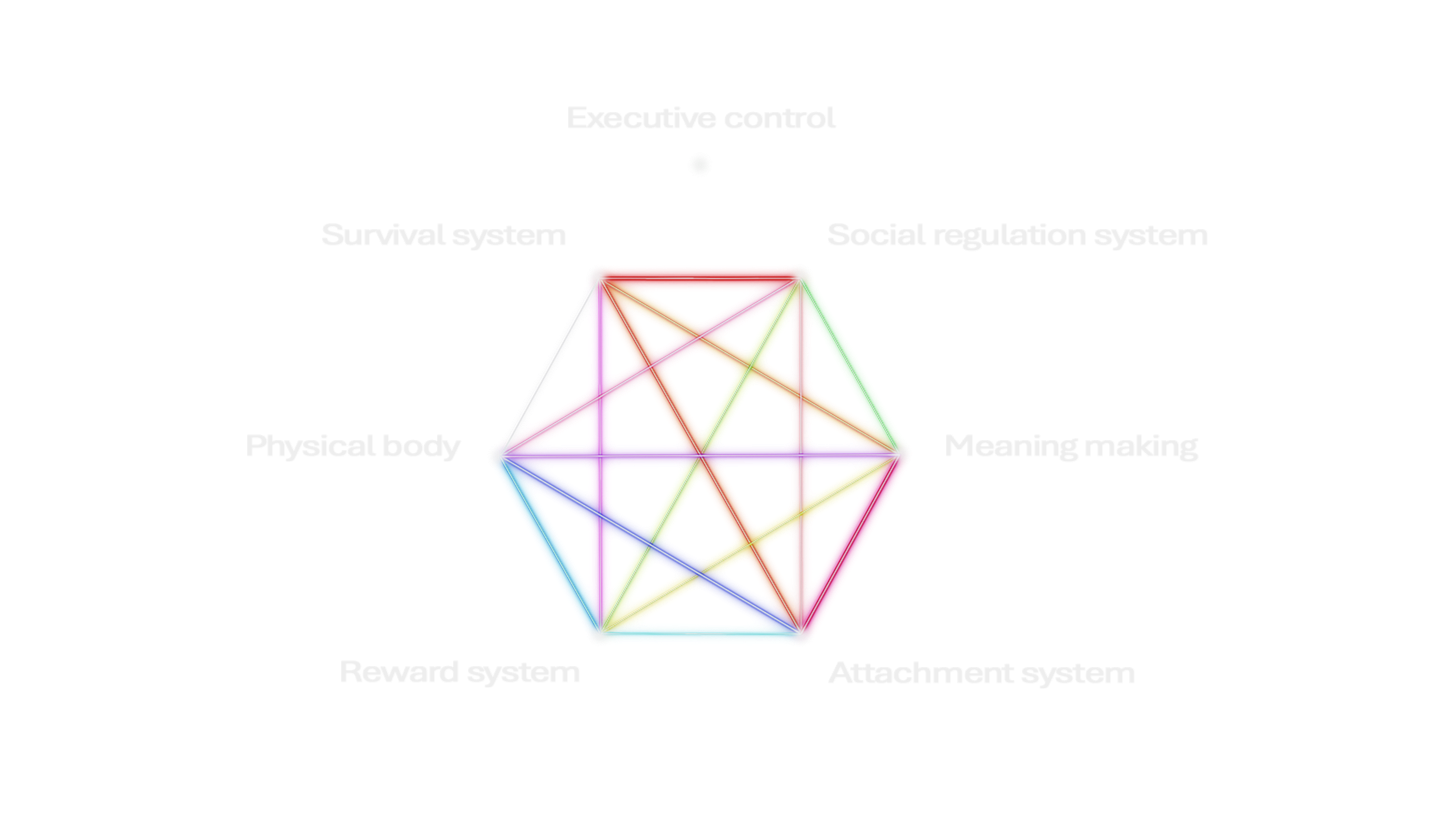
VTMM is built around 7 systems: Threat, Reward, Bonding, Taboo, Body, Mind, and Control.In VTMM, “systems” means real mind/body functions. They are not separate organs or fixed personality parts, but practical labels for patterns that stay recognizable across situations.The map is a coverage map for a broad range of distressing or trauma-adjacent patterns.
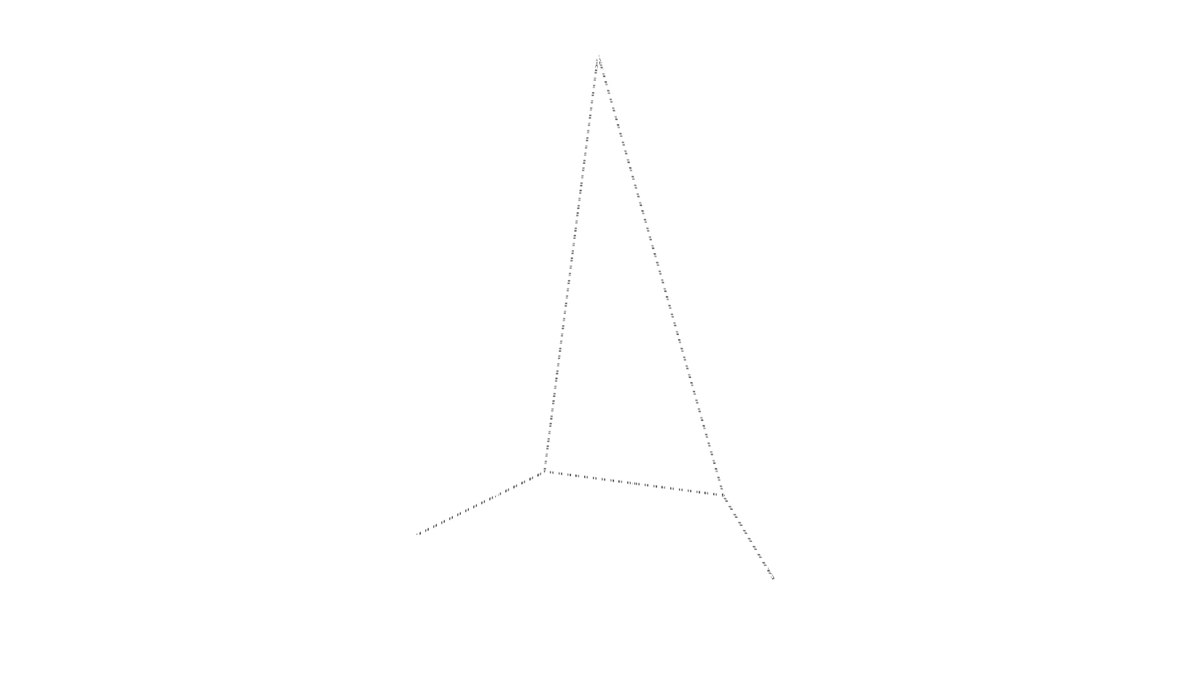
It uses a hexagonal floor as the base map and a hexagonal pyramid as the full structure: six core systems around the base, with Control positioned above as the regulating / directing layer.The goal of the map is to make internal patterns easier to locate.When systems activate together, their connections can define recognizable pattern areas — fear, shame, guilt, body distress, attachment fear, control loops, and mixed states.
Connections between systems are spectra of possible outputs, not single fixed emotions.7 Systems
› Threat — danger, risk, uncertainty, protection
› Reward — desire, relief, motivation, payoff
› Bonding — attachment, closeness, belonging, rejection
› Taboo — shame, wrongness, rules, disgust
› Body — sensations, physical safety, embodiment
› Mind — meaning, identity, interpretation, narrative
› Control — agency, inhibition, choice, actionConnection Examples
› Mind + Taboo: can form shame, guilt, pride etc.
› Body + Threat: can form physical danger or vulnerability.
› Threat + Control can form checking, urgency, avoidance, or loss-of-control.The map does not diagnose. It gives the pattern a visible structure, so the experience can become easier to read and route.
Structure: In-depth view
VTMM is built around real-life contexts and repeating stress patterns.A pattern begins with system activation: one or more core systems become active in response to a situation, memory, signal, expectation, or internal state.From there, the model tracks the pattern through a simplified structure:1. System activation — which core systems are active
2. Dominant connection spectrum — which emotional / functional range the pattern enters
3. Direction / valence — which direction it flows and whether the pattern feels negative, positive, or mixed
4. State pattern — the recognizable internal configuration that forms
5. Lived state — how the pattern feels from the inside
6. Output — thoughts, emotions, urges, body states, behaviors, or relationship movesIn practice, the path is simple: check which systems are active, find the most suitable connection, identify its direction and valence, then look at what state pattern forms, how it feels, and how it manifests.The same broad output can work differently depending on context.
For example, shame, guilt, fear, disgust, urgency, or body distress can change depending on whether the pattern is about yourself, another person, a group, a body signal, a rule or a mistake.This is only the simplified website view.
The full structure inside the document library is more detailed and breaks patterns into deeper layers, mechanics, and sub-mechanics.This structure is meant to make a pattern easier to inspect without flattening it into one label.
Examples
Loop ScenariosLoop scenarios show how the pattern keeps itself alive: what triggers it, what confirms it, what gives short-term relief, and what makes it repeat.Each example comes in two versions:1. Mini example— quick walkthrough
2. Full example — deeper breakdown
VTMM examples are built to show two things: psychological mechanics and maintenance loops.
ClarityVTMM examples show the mechanics behind emotional patterns.They help separate similar states: shame often targets identity, guilt targets action or responsibility, and body shame targets exposure or bodily acceptability.The goal is to see what kind of mechanism is running, not force a perfect label.
Loop examples
First Example — “I’m coming off wrong loop"
Mini versionSituation:
The person you’re talking to gets quiet.
Your brain fills the gap: “I’m off.” You tense up and pull back so you don’t make it worse.
For a moment, that feels safer — but now the interaction gets quieter because you got quieter too.
Then the quiet feels like proof: “See? Something was wrong.”
Next time, the loop starts faster.Sequence:
uncertainty → “I’m off” → tension → pull back → relief → quieter interaction → “see?” → loop strengthens
Full Example Deconstruction — “I’m Coming Off Wrong”Hook:
“Something about me is landing wrong right now.”The person is in a conversation, but attention splits. They are no longer just talking. They are also tracking their face, tone, timing, wording, and effect.
The moment starts feeling exposed.Trigger:
A small social uncertainty appears.Example: the person says something normal, but the other person responds flatter than expected and glances at their phone.
Nothing clear has happened yet. There is only uncertainty.State:
The uncertainty gets interpreted:
“Wait — did I come off weird?”
“Something about me is off.”That meaning changes the whole moment.
Neutral reactions feel loaded. Small pauses feel meaningful. The body gets tense. The person becomes guarded and less spontaneous.The urge becomes:
fix it / prevent damage / reduce exposure / regain controlSo it is no longer just a thought. It becomes a full state-pattern:
feeling + perception + body tension + urgeProtective Move:
The person pulls back.They speak less, shorten replies, stop initiating, and try not to make things worse.
This is an understandable attempt to reduce tension and social exposure.Relief → Confirmation Trap:
Pulling back works immediately.Less talking means fewer chances to say something wrong. Less visibility feels safer. Less spontaneity feels like more control.
So the system learns: “Safer.”But pulling back also changes the interaction.
The conversation gets quieter. Rhythm drops. Warmth drops. The other person may give less back.Now the moment really does feel flatter.
Then the person reads that as proof:
“See? Something was wrong.”The coping move created part of the evidence.Why It Repeats:
The loop teaches two lessons:1. Relief says: “Pulling back helped.”
2. Proof says: “Pulling back was necessary.”Next time, the person notices smaller cues faster, assumes something is wrong faster, and withdraws earlier.Eventually even an internal cue can start it:
“I feel weird today.”
“What if I’m off again?”Simple Loop:
I feel off → I pull back → the interaction gets quieter → the quiet feels like proof → next time I pull back fasterWhat’s Happening → How We Fix:
Fast:
Withdrawal brings short-term relief while feeding the loop.
Notice the pull to withdraw and do slightly less of it.✅Fair:
Uncertainty turns into assumption, then coping makes the interaction feel like proof.
Stay a little more present and do not treat the quieter interaction as evidence.✅Deep:
The state-pattern shapes perception, body tension, and behavior.
Soften the body, reduce the protective move, and reclassify the aftermath:
Not proof of defect, but the loop shaping the interaction.✅Variation:
Some people withdraw. Some overexplain.
Some perform harder. Some become overly nice.The behavior changes, but the loop logic stays the same:
coping brings relief → relief makes coping repeat → the changed interaction becomes confirmation fuel.
Second example — “I’m incompetent”
Mini versionSituation:
You make a small mistake at work.
Your brain jumps in: “I’m incompetent.”
You tense up and start checking everything harder so you don’t mess up again.
For a moment, that feels safer — but now every task feels heavier, slower, and more fragile.
The extra checking feels like proof that you can’t trust yourself.Sequence:
mistake → “I’m incompetent” → tension → overcheck → relief → work feels heavier → “see?” → loop strengthens
Full Example Deconstruction — “I’m incompetent””Hook:
“If I made that mistake, maybe I’m not actually good at this.”The person is working normally, but one mistake changes the whole feel of the task. They are no longer just doing the work. They are also judging what the mistake says about them.The work starts feeling like a test.Trigger:
A small work uncertainty appears.Example: the person sends something with a typo, misses a detail, forgets one step, or gets a minor correction.
Nothing catastrophic happened. But the moment creates enough ambiguity for the loop to start.State:
The mistake gets interpreted:
“How did I miss that?”
“Maybe I’m incompetent.”That meaning changes the whole task.
Normal work starts feeling riskier. Small details feel more dangerous. The body gets tense. The person becomes rigid, cautious, and self-conscious.The urge becomes:
check harder / prevent mistakes / prove competence / regain controlSo it is no longer just a thought. It becomes a full state-pattern:
feeling + perception + body tension + urgeProtective move:
The person starts overchecking.They reread too many times, second-guess simple decisions, redo things that were already fine, and slow down to avoid another mistake.This is an understandable attempt to reduce uncertainty and feel competent again.Relief → Confirmation Trap:
Overchecking works immediately.More checking means fewer obvious mistakes. Slowing down feels safer. Rechecking gives a sense of control.So the system learns: “Safer.”But overchecking also changes the work.
The task becomes slower, heavier, and more draining. Decisions feel less automatic. Confidence drops because everything now needs verification.Now the work really does feel harder.
Then the person reads that as proof:
“See? I can’t trust myself.”The coping move created part of the evidence.Why It Repeats:
The loop teaches two lessons:Relief says: “Checking helped.”
Proof says: “Checking was necessary.”Next time, the person notices smaller possible mistakes faster, doubts themselves faster, and checks earlier.Eventually even a normal task can start it:
“What if I missed something?”
“What if this proves I’m bad at this?”Simple Loop:
I make a mistake → I overcheck → work gets harder → the difficulty feels like proof → next time I check fasterWhat’s Happening → How We Fix:Fast:
Overchecking brings short-term relief while feeding the loop.
Notice the urge to recheck and reduce it slightly.✅Fair:
A mistake turns into an identity assumption, then checking makes work feel heavier.
Separate the mistake from identity, check once with a clear standard, then move on.✅Deep:
The state-pattern shapes perception, body tension, and behavior.
Soften the body, reduce compulsive checking, and reclassify the aftermath:
Not proof of incompetence, but the loop making normal work feel unsafe.✅Variation:
Some people overcheck. Some procrastinate.
Some ask for reassurance. Some overwork. Some overpolish.The behavior changes, but the loop logic stays the same:
coping brings relief → relief makes coping repeat → the changed situation becomes confirmation fuel.
Clarity
Clarity on psychological mechanics
VTMM documents are designed to make emotional patterns more legible.Instead of treating a feeling as one flat label, VTMM separates close emotional states by what is being judged, devalued, or made meaningful.This matters because shame, guilt, and body shame can feel similar from the inside. They are common names for painful self-related feelings, but they are not organized the same way.Identity Shame is usually about the self.
The painful meaning is not only “something happened,” but “this says something bad about who I am.”
The person may feel exposed, inferior, defective, unacceptable, or reduced to a negative identity.Guilt is usually about action, responsibility, or consequence.
The painful meaning is not “I am bad as a whole,” but “I did something wrong, failed to do something, caused harm, or need to repair something.”
Guilt points toward responsibility, confession, correction, repair, or making things right.Body Shame is usually about the body being seen, judged, compared, sexualized, exposed, or treated as unacceptable.
The painful meaning attaches to appearance, bodily signs, visibility, disgust, attractiveness, weakness, modesty, or bodily acceptability.The difference is important.
A person may say “I feel shame,” but the actual pattern may be closer to guilt, body shame.Guilt may need responsibility to be calibrated.
Identity shame may need the event separated from the whole self.
Body shame may need the gaze, exposure, disgust, and body-meaning to be mapped directly.Clarity helps answer the question: why does this feeling exist in this form?
Am I feeling this because my identity feels judged?
Or because my action feels wrong?
Or because my body feels exposed or devalued?The goal is not to force a perfect label.The goal is to see what kind of pattern is running, so the feeling becomes easier to understand instead of staying as one painful blur.
Updates to the map, guide and other documents are posted here.You can subscribe for updates below.
Guide and images updated to an initial cohesive version — 02.12.2025
VTMM v1.0 — Release — 04.02.2026What’s included (v1.0):- Start Here + Essentials (orientation + model logic)- Risks & Safe Use- Tools: Link (Connection Finder), Rumble (System Finder), Manual Scoring- Resolution approaches (scope + routing guidance)- In-depth modules in this release: Body Shame, Bodily Anxiety, Identity Shame, Threat Appraisal, Guilt, Fear of Punishment
If you want a way to keep track of new releases, you can subscribe to update emails below.
Your email will only be used to send updates about this project. No spam, no sharing.
If you found this useful and want to support the project, consider a contribution.
It helps me keep improving it and releasing updates — thank you.
The button links to a PayPal checkout page.
Help me shape VTMM